Mango Tapioca Pudding – Easy Tropical Dessert
Mango Tapioca Pudding, often lovingly called Mango Sago, is a dessert that instantly transports me to sun-drenched shores and carefree summer days. There’s a reason this tropical delight has captured hearts worldwide; it’s a symphony of textures and flavors that’s both incredibly satisfying and refreshingly light. Imagin extracte the sweet, vibrant burst of ripe mango, perfectly complemented by the chewy, translucent pearls of sago, all swimming in a creamy, subtly sweet coconut milk base. It’s this delightful interplay of soft, yielding sago and luscious mango that makes Mango Tapioca Pudding so utterly irresistible. What truly sets this Mango Sago apart is its incredible versatility – it’s a showstopper for a special occasion, yet simple enough for a weeknight craving. The way the creamy coconut milk melds with the fresh mango is pure magic, creating a dessert that’s a true celebration of summer’s bounty.
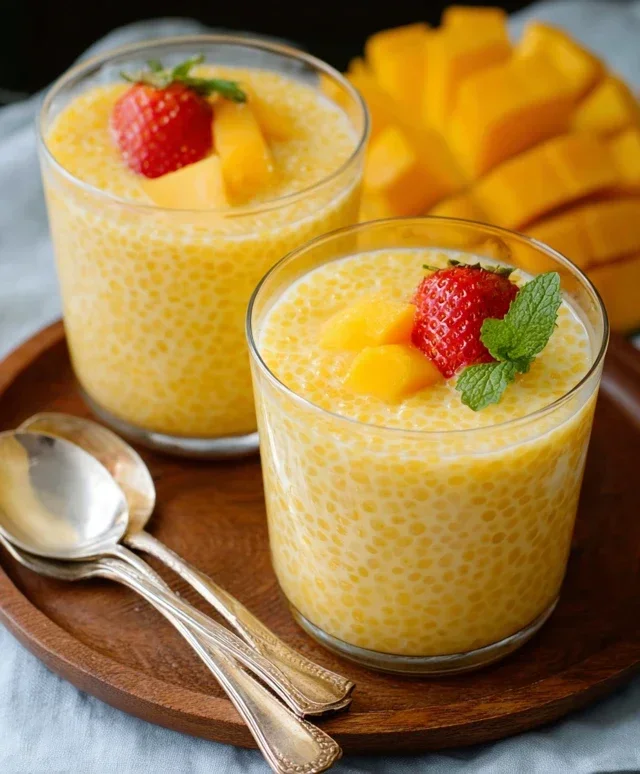
Mango Tapioca Pudding (Mango Sago)
There’s something incredibly comforting and delightfully refreshing about a good tapioca pudding. But when you add the luscious sweetness of ripe mangoes and the creamy richness of coconut milk, you elevate it to a whole new level of dessert heaven. My Mango Tapioca Pudding, often called Mango Sago in many parts of the world, is a testament to this perfect marriage of flavors and textures. It’s a dessert that’s both elegant enough for guests and simple enough for a weeknight treat. The pearls of tapioca become delightfully translucent and chewy, swimming in a creamy, fragrant mango-infused base, all brightened by the subtle tartness of strawberries.
This recipe is surprisingly straightforward, relying on simple, wholesome ingredients to create a truly spectacular outcome. The magic happens as the tapioca pearls absorb liquid and swell, creating that signature soft, delightful texture. The mangoes provide a natural sweetness and a vibrant color, while the coconut milk adds a luxurious mouthfeel that coconut lovers will adore. Don’t be intimidated by the tapioca pearls; they are quite forgiving and with a little patience, you’ll achieve perfect results every time.
Let’s get started on creating this tropical delight that’s sure to become a favorite in your dessert repertoire.
Ingredients:
Cooking the Tapioca Pearls
The first crucial step to a perfect tapioca pudding is properly cooking the tapioca pearls. This process requires a good amount of water to allow the pearls to swell without clumping together.
1. In a large saucepan, combine the 8 cups of water and bring it to a rolling boil over high heat. Once the water is vigorously boiling, slowly and gradually add the 3/4 cup of small tapioca pearls. It’s important to add them slowly while stirring constantly to prevent them from sticking to the bottom of the pot. This initial boiling in a large volume of water is key to getting the pearls to soften and become translucent. Continue to boil the tapioca pearls, stirring frequently, for about 15-20 minutes, or until most of the pearls have become translucent with just a small white dot in the center. Some might already be completely clear; this is generally fine.
2. Once the tapioca pearls have reached the desired translucency, drain them thoroughly in a fine-mesh sieve. Rinse the cooked tapioca pearls under cool running water for a minute or two. This rinsing step is very important as it helps to remove any excess starch that can make the pudding gummy and also stops the cooking process, preventing them from becoming overcooked and mushy. Set the rinsed tapioca aside.
Creating the Creamy Mango Base
While the tapioca is draining, let’s prepare the luscious mango base that will give our pudding its signature flavor and color.
3. Prepare your mangoes. Peel the mangoes and carefully slice the flesh away from the pit. You want to end up with a good amount of smooth mango flesh. You can do this by dicing the mango flesh and then pureeing about two-thirds of it in a blender or food processor until smooth. This mango puree will form the vibrant base of our pudding. Reserve the remaining one-third of the diced mango for adding chunks to the pudding later, which will give delightful bursts of fresh mango flavor and texture.
Combining and Finishing the Pudding
Now it’s time to bring all the elements together for that final, glorious pudding.
4. In the same large saucepan you used for the tapioca (no need to wash it thoroughly, just give it a quick rinse if you prefer), combine the 1 cup of milk, 3/4 cup of full-fat canned coconut milk, and 2 tablespoons of the honey (reserve the remaining 1 1/2 tablespoons for later). Heat this mixture over medium heat, stirring occasionally, until it is warm and the honey has dissolved completely. Do not let it boil. Once warm, stir in the prepared mango puree. Continue to heat gently, stirring constantly, until the mixture is hot but not boiling. The goal here is to warm through the milk and coconut milk and combine it with the mango, allowing the flavors to meld beautifully.
5. Add the cooked and rinsed tapioca pearls to the warm mango-milk mixture. Stir everything together gently until well combined. Continue to cook over low heat, stirring frequently, for another 5-7 minutes. This allows the tapioca pearls to absorb some of the liquid and the pudding to thicken slightly. The pudding should have a creamy consistency, not too thick and not too thin. If it seems too thick, you can add a splash more milk. If it seems too thin, you can continue to cook it for a few more minutes, stirring constantly. Stir in the remaining 1 1/2 tablespoons of honey, or adjust to your preferred sweetness. Finally, gently fold in the reserved diced mango chunks and the sliced strawberries.
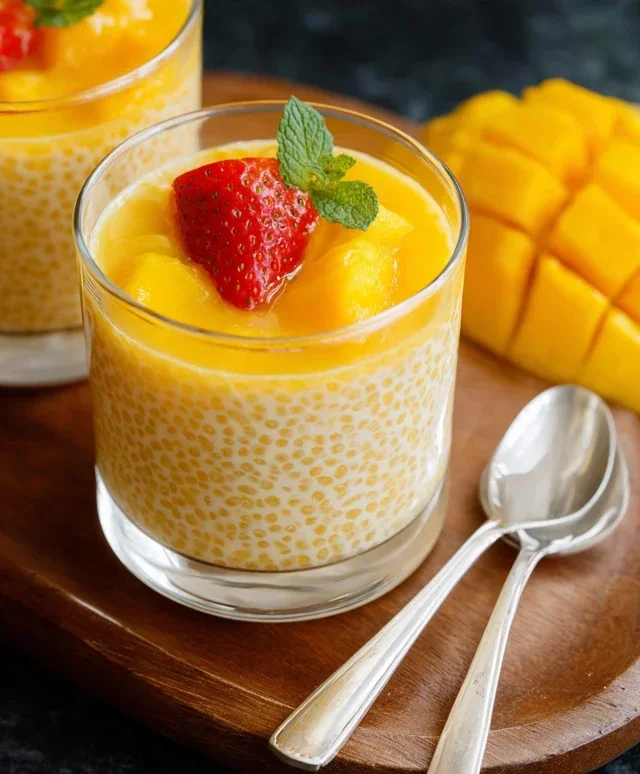
Allow the Mango Tapioca Pudding to cool at room temperature for about 30 minutes before chilling it in the refrigerator for at least 2-3 hours, or until completely cold and set. This chilling time is essential for the flavors to fully develop and for the pudding to reach its perfect pudding-like consistency. Serve chilled, garnished with a few extra strawberry slices if desired. Enjoy this taste of the tropics!
Conclusion:
There you have it – a simple yet incredibly satisfying recipe for Mango Tapioca Pudding, also known as Mango Sago! This delightful dessert is a perfect blend of creamy coconut milk, chewy tapioca pearls, and the sweet, tropical burst of fresh mango. It’s wonderfully refreshing, surprisingly easy to whip up, and always a crowd-pleaser, making it an ideal treat for any occasion. Whether you’re looking for a light after-dinner indulgence or a vibrant afternoon snack, this Mango Tapioca Pudding delivers pure bliss. Don’t hesitate to give it a try; I promise you won’t be disappointed!
Serving this pudding chilled is key to its refreshing appeal. It’s fantastic on its own, but you can elevate it further by topping it with extra diced mango, a sprinkle of toasted coconut flakes, or a drizzle of condensed milk for added sweetness. For variations, consider adding a hint of cardamom or a splash of lime juice for a zesty twist. You could also experiment with different types of mango for unique flavor profiles.
Frequently Asked Questions:
Can I use frozen mango for this recipe?
Yes, absolutely! Frozen mango works wonderfully in this Mango Tapioca Pudding. Thaw it completely before dicing and adding it to the pudding. You might even find that the thawed mango releases extra juice, which can contribute to a more intense mango flavor.
How long does the tapioca need to soak?
The soaking time for small tapioca pearls can vary, but generally, 30 minutes to an hour is sufficient. This helps them cook more evenly and become perfectly translucent and chewy. If you’re using larger pearls, you might need to soak them for longer.
How should I store leftover Mango Tapioca Pudding?
Store any leftovers in an airtight container in the refrigerator for up to 2-3 days. The texture might change slightly as it sits, becoming a little firmer, but it will still be delicious. Give it a good stir before serving again.
Mango Tapioca Pudding (Mango Sago)
A refreshing and creamy tropical dessert featuring sweet mangoes and chewy tapioca pearls, perfect for a light treat.
Ingredients
-
8 cups (1.9L) water
-
3/4 cup (155g) small tapioca pearls
-
1 cup (235ml) whole milk
-
3/4 cup (175ml) full-fat canned coconut milk
-
3 1/2 tablespoons honey, divided
-
3 medium-sized mangoes
-
1 cup sliced strawberries
Instructions
-
Step 1
Cook tapioca pearls: In a large saucepan, bring 8 cups of water to a boil. Add tapioca pearls and cook according to package directions, usually about 10-15 minutes, until translucent. Drain and rinse with cold water to stop the cooking and remove excess starch. -
Step 2
Prepare mangoes: Peel and dice two of the mangoes into small cubes. Puree the remaining mango until smooth. -
Step 3
Combine liquids: In a medium bowl, whisk together the whole milk, coconut milk, and 2 tablespoons of honey until well combined. Stir in the mango puree. -
Step 4
Assemble the pudding: Gently fold the cooked tapioca pearls and diced mango into the milk and mango mixture. Add the sliced strawberries. -
Step 5
Chill: Cover the bowl and refrigerate for at least 30 minutes to allow the flavors to meld and the pudding to thicken slightly. -
Step 6
Serve: Drizzle with the remaining 1 1/2 tablespoons of honey before serving, if desired.
Important Information
Nutrition Facts (Per Serving)
It is important to consider this information as approximate and not to use it as definitive health advice.
Allergy Information
Please check ingredients for potential allergens and consult a health professional if in doubt.